


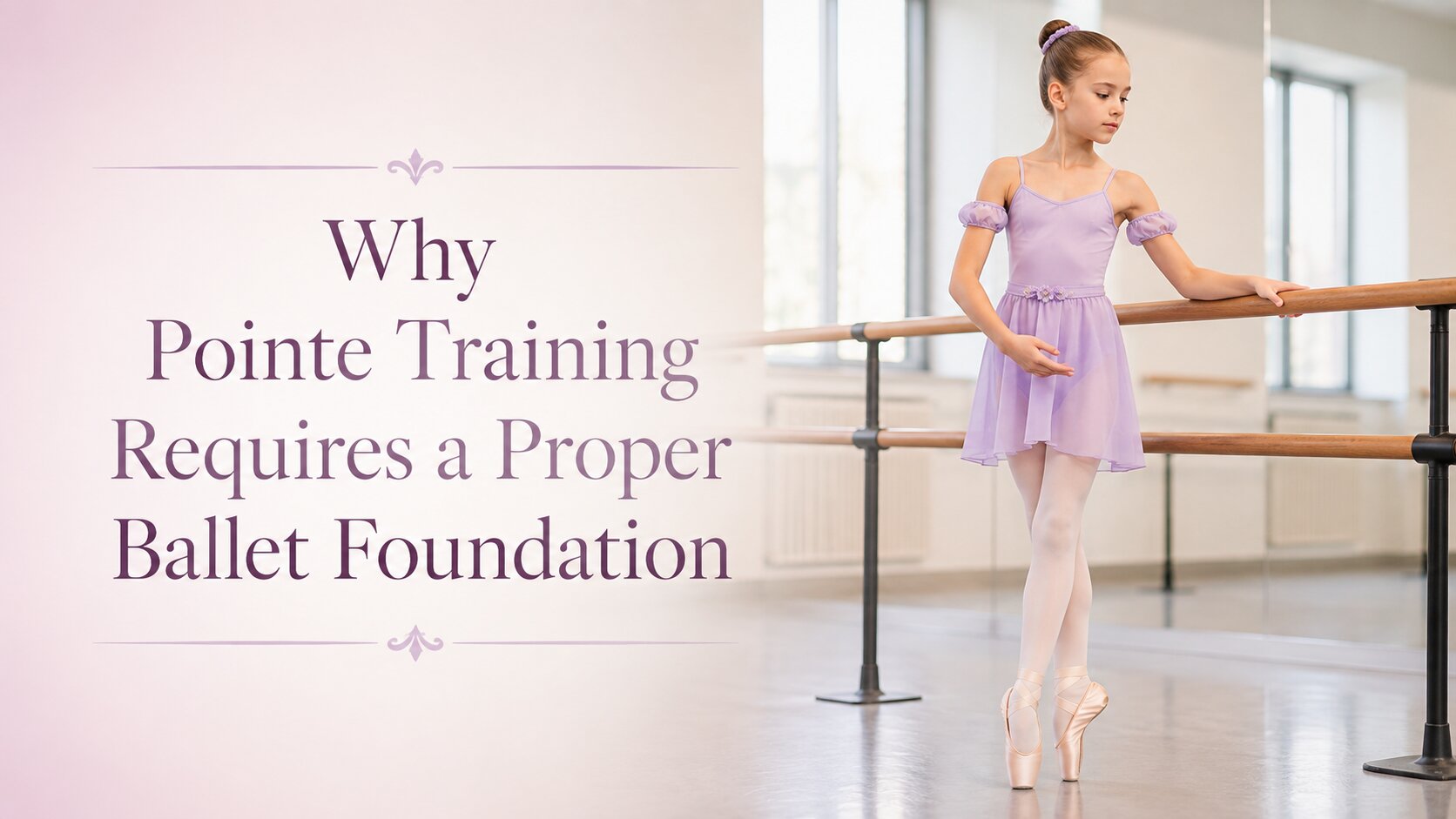
Pointe work is one of the most exciting milestones in ballet. Many young dancers look forward to wearing pointe shoes and learning this beautiful part of classical ballet. For parents, it can also feel like a big achievement in their child’s dance journey.
But pointe training should never be rushed. Before a student begins pointe, they need a strong ballet foundation. This helps protect the dancer’s body and supports better technique over time.
For families in Dundas, Hamilton, and nearby areas, it is important to understand why proper preparation matters.
What is pointe training?
Pointe training is a ballet technique where dancers perform movements while supporting their weight on the tips of specially made pointe shoes. It requires strength, balance, control, and correct alignment.
Pointe may look light and graceful on stage, but it takes serious preparation. A dancer must have strong feet, ankles, legs, core, and posture before starting.
This is why pointe is usually introduced only after several years of ballet training. A qualified teacher must decide when a student is ready.
Parents can learn more about ballet levels on the Ballet Classes page.
Why pointe should not be rushed
Some children may want to start pointe as soon as they see older dancers wearing pointe shoes. This is natural. Pointe shoes can feel special and exciting.
However, starting too early can create problems. A dancer who is not ready may struggle with balance, posture, and foot placement. They may also develop poor habits that are harder to correct later.
Good ballet training helps students build strength slowly. It teaches them how to move with control before adding the challenge of pointe shoes.
Pointe is not just about age. Readiness depends on training, strength, alignment, focus, and teacher approval.
The importance of strong ballet technique
Before pointe, students need solid ballet technique. This includes posture, turnout awareness, balance, coordination, and clean footwork.
A strong foundation helps dancers understand how to hold the body correctly. It also teaches them how to move safely from one position to another.
Without this foundation, pointe work can become difficult and unsafe. The dancer may rely too much on the shoes instead of using proper strength and technique.
This is why regular ballet classes are so important. Each class helps prepare the body for future levels.
Families can review class options and schedules through the Hamilton City Ballet timetable.
Strength matters before pointe
Pointe training uses the whole body. It is not only about the feet.
A dancer needs strong legs to support movement. They need a strong core to balance. They need controlled ankles and feet to rise, lower, and move safely.
They also need good posture. If the upper body is weak, the dancer may lean, collapse, or lose control.
Ballet training builds these skills over time. Simple exercises at the barre, centre work, jumps, and balances all help prepare students for pointe later.
Balance and control are essential
Pointe work requires steady balance. A dancer must control the body while standing on a much smaller surface than usual.
This is why students first practise balance in regular ballet shoes. They learn how to hold positions, shift weight, and move smoothly.
Control is just as important as strength. A dancer should be able to rise and lower carefully. They should not fall into movements or force the body.
Good control makes pointe work look graceful. More importantly, it helps the dancer move with care.
Why proper dance attire matters
Correct dance attire helps teachers see a student’s posture and alignment. This is especially important before pointe training.
Teachers need to check how the feet, legs, knees, hips, back, and shoulders are working together. Loose clothing can make this harder to see.
Proper ballet shoes also matter. Before pointe shoes, students usually train in soft ballet slippers. These help them learn footwork and build awareness.
Parents can review the dance attire guide before buying class clothing or shoes.
Teacher approval is important
Parents should not decide pointe readiness alone. Students should not begin pointe just because they reach a certain age or want pointe shoes.
A trained ballet teacher can assess whether the student is ready. The teacher may look at strength, technique, attendance, focus, body control, and class level.
This careful approach protects the dancer. It also helps students feel more confident when they finally begin pointe.
When pointe is introduced at the right time, the dancer is more prepared and more likely to enjoy the process.
How parents can support their child
Parents can support their child by encouraging patience. Pointe is an important step, but it should come at the right time.
It helps to remind children that every ballet class matters. Barre work, stretching, posture, and simple exercises all build the foundation for advanced training.
Parents should also avoid comparing their child with other dancers. Every student develops at a different pace. Some may be ready earlier, while others need more time.
The goal is not to start pointe quickly. The goal is to start pointe safely and confidently.
Final thoughts
Pointe training is a beautiful part of ballet, but it requires careful preparation. A dancer needs strength, balance, posture, control, and proper technique before beginning.
A strong ballet foundation helps students move safely and gracefully. It also gives them the confidence to handle more advanced training when the time is right.
For families in Dundas and Hamilton, choosing a ballet school with structured training and experienced guidance is important. Parents can explore enrollment details through the registration page.
With patience and the right foundation, pointe work can become a meaningful and rewarding step in a young dancer’s ballet journey.

